How safe are the cards we use? Sponsored by Saily - Prepare for your next destination today! Download the Saily app now or go to https://saily.com/veritasium and use code ‘veritasium’ for 15% off. Sha
The frustrating thing is, the qualitiy of the video is so good, the way it was narrated was so attractive and they left us with cliffhanger. Please Veritasium, you guys do things for science
The smart card was invented in 1974 by French engineer Roland Moreno.
France adopted it quickly, while the US and UK stuck with magnetic stripes because they were cheaper and already widely deployed.
That economic inertia caused a 20‑year delay, even though the chip was far more secure.
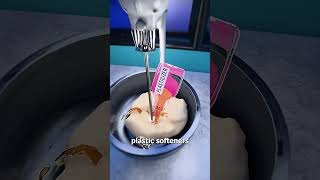
I'm a magician and gaff maker. A few years ago, a mate came to me with an idea: he wanted to make a playing card work as a credit card. I dissolved the plastic from the card, split a playing card, put what remained of the credit card into the middle, and re-glued it (it was a bit more involved than that, but that'll do to save space here). It worked great. He would ask in a shop if he could "pay by card", and when they said yes, he would pull out an Ace of Spades. They would laugh at the 'joke'; he would then actually pay with it and put it away, leaving them shocked and confused.
It's a shame not to mention that the invention of the chip on bank cards is a great story of French innovation, marked by the genius of Roland Moreno.
In 1974, this self-taught Frenchman, passionate about electronics, filed the patent for the "smart card" ("Carte à puce" which he then called the memory card). His brilliant idea was to insert an integrated microcircuit onto a plastic substrate to store and protect information.
And it was another Frenchman, Michel Ugon, who, at the end of the 1970s, added a microprocessor, allowing the card to execute more complex programs.
I love how mythbusters was going to do a show on credit card chip security, but Visa and Amex literally forced them under threat of legal action not to air it.
todau i got to learn veritasium viewers are not blinded by their fanatism towards the channel and i'm glad these group of people will keep the channel on track for many many years
I have been watching Veritasium for years. I really hope this “to be continued” doesn’t become a thing. We like the show because it’s one episode, you get the value and move on
Prepare for your next destination today! Download the Saily app now or go to saily.com/veritasium and use code 'veritasium' to receive 15% off
We use cookies, device fingerprinting and cross-device tracking to personalise content, serve targeted advertising, and analyse how you use our site across your devices. By clicking Accept all you consent to the use of these tracking technologies. Your data may be used to build a profile of your interests and show you personalised ads on other sites.
Privacy policy





















Comments (20)
Daily Junction discussion mixed with clearly attributed comments from the original video provider.
Join in — free. Comments on Daily Junction are for members, so real names stay rare and bots stay out.
One field. We email you a 6-digit code — no password needed. Your comment is kept while you do it.
Under 13? You’ll need a parent’s OK first — it takes them one click.
France adopted it quickly, while the US and UK stuck with magnetic stripes because they were cheaper and already widely deployed.
That economic inertia caused a 20‑year delay, even though the chip was far more secure.
In 1974, this self-taught Frenchman, passionate about electronics, filed the patent for the "smart card" ("Carte à puce" which he then called the memory card). His brilliant idea was to insert an integrated microcircuit onto a plastic substrate to store and protect information.
And it was another Frenchman, Michel Ugon, who, at the end of the 1970s, added a microprocessor, allowing the card to execute more complex programs.