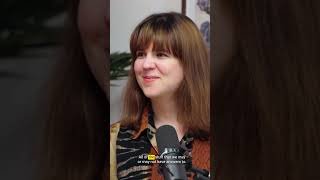
In this episode, Professor Hannah Fry and VSauce's Michael Stevens explore the traces humans leave behind and what those traces reveal about how we think.
At 46:45 you can skip forward 10sec and if you use that feature to skip back and forth you’ll hear Hannah saying “right!” over and over again while Michael yammers incoherently in the background
Have you ever watched or learned something and then had the thought/feeling “Wow, I’m not sure how, but I think learning or hearing about this will have lifelong impact on myself and my outlook on life.” Well… I’m getting that feeling. So glad this podcast exists!
My mates and i found a bore hole in the woods recently, we visit it often chanting "BOREHOLE" while walking to it, to then listen to the sound that little pebbles make when dropped down it. it sounds like the flexing of a frozen lake....we have calculated it it to be 30 ish meters deep.
I'm glad to have the word "manuport" added to my vocabulary. I've often wondered how many small things were carried by a curious child, then discarded or lost in a place where it didn't originate.
22:30 I love that the two of you have these conversations and we’re able to observe… but I’m also reminded that no one in my life cares enough about these things to want to have these same conversations with me. 😂
I worked as an oilfield engineer for 13 years and I helped drill the deepest well in the red sea at the time (5 kilometers +). Hannah is correct in the guess: you first drill a really wide hole, you isolate it with a metal casing and cement, then you drill a smaller deeper hole, and so on.
A big part of it is that each section needs to be drilled in a way that's different that the other. The simplest thing is this: you have to fill the hole with a fluid that counteracts the pressure of the formation and its fluids, that drilling fluid also helps carry out the cuttings out of the hole so the drill pipe doesn't get stuck. Now you need a lighter fluid at the surface because the pressure is not high, and if you use a really heavy fluid you might break the formation and cause a "total loss", basically causing a facture that will swallow any amount of fluid you pump. When you go deeper, you need a heavier fluid, so you can't drill both sections with 1 fluid weight.
And that's just part of it, there's so many other complications, and the deeper you dig, things get exponentially more complex :)
I love that you talked about the word geezer. The word geezer has a special place in my heart. I'll never forget it - I was 53 at the time (I'm 67 now) and I was stuck in LA traffic, and apparently I wasn't moving fast enough for the guy behind me and he came roaring up beside me and yelled "Move it geezer!" This was the first time I'd ever been called a geezer and I had the most unexpected reaction: I got this giant grin on my face. I don't know why but I was so happy to be called a geezer. I told the story to everyone I knew in the days afterward because I was so proud to be a geezer. It still resonates with me now that I'm a true geezer!
One example that I think of when it comes to modern archaeology is what I call video game asset archaeology. Sometimes there are textures or sounds that turn up repeatedly across all sorts of different games, often edited or combined with others, and there are people that will recognise them and trace them back to a specific CD of stock images/audio that was produced decades ago. It's interesting to find the origins of these things and see all the ways they have been used over the years, much like seeing a cool rock that has been carried for hundreds of miles.
Thanks for making these podcasts free to watch/listen to. Cant explain how big of an impact michael has had on my life since early vsauce days. Hannah is also a great mind.
I appreciate how often (two incredibly well-versed and researched people) you say "I don't know" without wild speculation or misinformation. Its so admirable to hear that phrase.
It is refreshing to see / hear someone say "I Don't Actually Know" instead of just saying something and pretending that you know. It takes incredible humility and wisdom.
I adore this podcast because it is just two wildly curious people being amazed at things and wanting to know more, ask questions and fantasize about the possibilities. it really is a child’s wonder in adult version
We use cookies, device fingerprinting and cross-device tracking to personalise content, serve targeted advertising, and analyse how you use our site across your devices. By clicking Accept all you consent to the use of these tracking technologies. Your data may be used to build a profile of your interests and show you personalised ads on other sites.
Privacy policy





















Comments (20)
Daily Junction discussion mixed with clearly attributed comments from the original video provider.
Join in — free. Comments on Daily Junction are for members, so real names stay rare and bots stay out.
One field. We email you a 6-digit code — no password needed. Your comment is kept while you do it.
Under 13? You’ll need a parent’s OK first — it takes them one click.
A big part of it is that each section needs to be drilled in a way that's different that the other. The simplest thing is this: you have to fill the hole with a fluid that counteracts the pressure of the formation and its fluids, that drilling fluid also helps carry out the cuttings out of the hole so the drill pipe doesn't get stuck. Now you need a lighter fluid at the surface because the pressure is not high, and if you use a really heavy fluid you might break the formation and cause a "total loss", basically causing a facture that will swallow any amount of fluid you pump. When you go deeper, you need a heavier fluid, so you can't drill both sections with 1 fluid weight.
And that's just part of it, there's so many other complications, and the deeper you dig, things get exponentially more complex :)
Kudos to both Michael and Hannah for doing this!
Me: "He's gonna lick that."